
Why Most Budget Travel Advice Falls Short
The problem with most budget travel content online is that it is written by people who are either selling you something or telling you what you want to hear rather than what you need to know. The advice tends to be generic, overly optimistic, and sometimes simply wrong.
Real budget travel involves making smart decisions that require genuine knowledge of how travel actually works not just lists of obvious tips that you could have figured out yourself. This guide is different. Everything here comes from real travel experience and is designed to give you practical advantages that most travelers never discover.
The Real Budget Travel Secrets
1. The Cheapest Flight Is Often Not a Direct One
Most travelers search for flights from their home city to their destination and book whatever comes up. But one of the biggest savings in travel comes from understanding that flying into a nearby cheaper hub and then taking a local budget carrier or overland transport to your actual destination can save you hundreds of dollars.
For example, flying into Kuala Lumpur and then taking a budget flight or bus to Cambodia is often far cheaper than flying directly to Phnom Penh. Flying into Islamabad and taking a bus to Gilgit costs a fraction of what a direct domestic flight would cost. Learning to think in terms of hubs and connections rather than direct routes is one of the most powerful flight booking skills any budget traveler can develop.
2. The Best Deals Are Never Online
Online booking platforms like Booking.com and Hostelworld are convenient tools but they are not where the best deals are. Every guesthouse and small hotel that lists on these platforms pays a commission of 15 to 25 percent, and that cost is passed directly to you in the form of higher prices.
Walking into a guesthouse and asking for the room price directly almost always results in a lower price than what you see online. Staying for three or more nights and negotiating a weekly rate saves even more. In many parts of Asia, the best budget accommodation options are small family-run guesthouses that do not list online at all and can only be found by walking the streets and asking around.
3. Lunch Is Almost Always Cheaper Than Dinner
In most Asian countries, the same restaurant will charge noticeably more for dinner than for the same dishes at lunch. Markets and street food stalls are busier and more varied at lunchtime, which means more competition and lower prices. Making lunch your main meal of the day rather than dinner is a simple and effective way to eat well while spending significantly less.
Many local restaurants in Asia also offer a set lunch menu at a fixed price that represents much better value than ordering individual dishes in the evening. These lunch sets are usually not advertised in English but simply asking what is available often reveals excellent and affordable options that tourists never discover.
4. Local Transport Is Almost Always Available — You Just Have to Find It
Tourist transport exists to extract money from travelers who do not know about local alternatives. In almost every destination in Asia, there is a local bus, shared minivan, shared taxi, or train that serves the same route as the tourist shuttle at a fraction of the price. The tourist shuttle from Siem Reap to Bangkok costs several times more than the local bus. The private taxi from the airport costs three times more than the local bus that stops a short walk away.
Finding local transport options requires a little more effort asking guesthouse staff, talking to other long-term travelers, or simply walking away from the tourist area to where locals catch their buses. But the effort always pays off both financially and in terms of the authentic experience of traveling with local people rather than in a bubble of fellow tourists.
5. Where You Exchange Money Matters Enormously
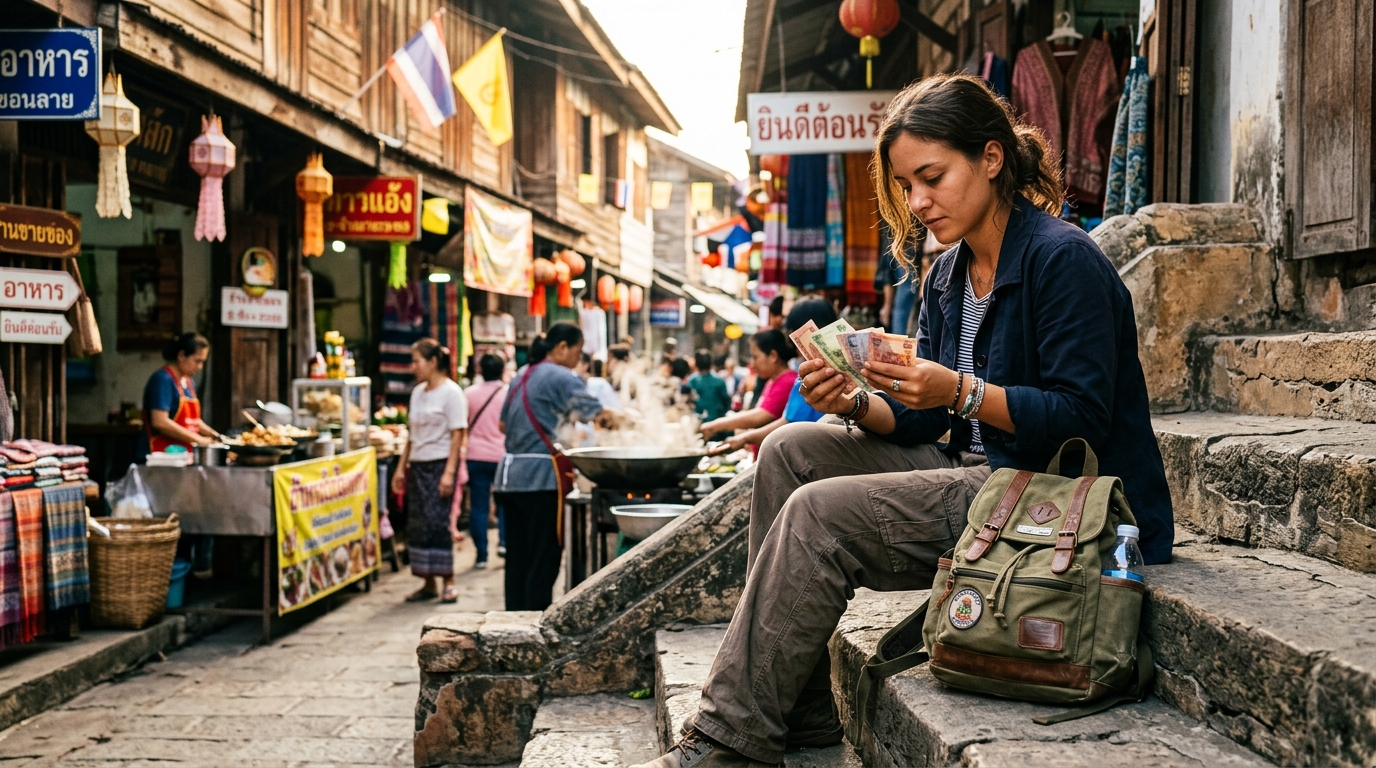
Airport exchange desks offer some of the worst exchange rates available anywhere. Hotel exchange services are usually only slightly better. The best exchange rates in most Asian countries are found at dedicated money changers in city center markets and bazaars, or by withdrawing local currency directly from a local bank ATM using a travel-friendly debit card that does not charge foreign transaction fees.
The difference between a good exchange rate and a bad one can amount to five to ten percent of your money. On a two week trip this can represent a significant sum. Research the best money changing options for each country you visit before you arrive, and never exchange money at the airport except as a last resort for a small amount to cover your immediate transport costs.
6. Traveling Just After Peak Season Saves More Than You Think
Every destination has a peak tourist season when prices for accommodation, tours, and activities are at their highest. What most travelers do not realize is that the period immediately after peak season often offers almost identical weather and conditions at significantly lower prices, with far fewer crowds.
Arriving in Bali two weeks after the peak summer season ends means the same beaches, the same temples, and the same food at prices that can be 30 to 50 percent lower. The same principle applies across most of Asia. Learning to identify the end of peak season for your destination and timing your arrival for those first few weeks of shoulder season is one of the most effective ways to cut costs without cutting quality.
7. Overpacking Costs You Real Money
Most travelers pack far more than they need and pay for it in ways they do not anticipate. Checked baggage fees on budget airlines can add up to more than the cost of the flight itself. Heavy bags mean more physical effort, more taxi rides instead of walking, and less flexibility in choosing accommodation that requires climbing stairs or walking a distance from transport.
Experienced budget travelers know that almost everything you might need can be bought cheaply at your destination, and that traveling with just a carry-on bag not only saves money but makes the entire experience of moving between places dramatically easier and more enjoyable. Pack half of what you think you need and you will not regret it.
8. Your Fellow Travelers Are Your Greatest Resource
The most valuable source of current, accurate travel information is not a travel blog, a guidebook, or a travel agent. It is other independent travelers who have just come from where you are going. Sitting in a hostel common room or a local guesthouse and talking to people who have just completed the journey you are about to make will give you real-time information about prices, transport options, safety conditions, and hidden gems that no published source can match.
Travelers who have been in a country for several weeks also know which guesthouses have dropped their prices, which new street food stalls have opened, and which routes have changed. Cultivating this habit of exchanging information with fellow travelers is one of the most powerful tools any budget traveler has.
🌟 The Biggest Secret of All
The single most powerful budget travel secret is also the simplest one. The travelers who spend the least and experience the most are the ones who slow down. Staying in one place for a week instead of three days means lower average accommodation costs, fewer transport expenses, and a much deeper and more rewarding experience of the destination. Speed costs money in travel. Slowness saves it while enriching every aspect of the journey.
Mistakes That Destroy a Travel Budget
Booking Everything in Advance
Over-planning and pre-booking every hotel and activity before you arrive often costs more than booking on the ground. While some advance booking makes sense for peak season travel or once-in-a-lifetime experiences, locking yourself into a fully pre-booked itinerary removes the flexibility to take advantage of better deals, unexpected opportunities, and the recommendations of fellow travelers you meet along the way.
Eating at Restaurants That Have Menus in Multiple Languages
This is one of the most reliable indicators of a tourist-priced restaurant anywhere in Asia. If the menu is in English, Japanese, Korean, and three other languages, the prices have been adjusted upward for international visitors. The best and cheapest food in any Asian city is always found at places where the menu is written only in the local language and where the clientele is almost entirely local.
Taking Taxis When Walking Is Possible
In many Asian cities, distances that appear large on a map are actually very walkable. Walking not only saves money but gives you a far more intimate and interesting experience of a city than any taxi or tuk-tuk ride. Invest in a good offline map app before you travel and use walking as your default mode of urban transport whenever the weather and distance allow.
Final Thoughts
The real secrets of budget travel are not complicated tricks or hacks. They are the product of paying attention, being willing to do things differently from the tourist mainstream, and understanding that the best experiences in travel are almost always the most affordable ones.
Every tip in this guide has been learned through real travel experience and tested in the field. Apply them to your next trip and you will be genuinely surprised at how much further your money can go and how much richer your travel experience becomes as a result.
Travel smart, travel slow, and travel with your eyes open. The world is far more accessible than most people think.