
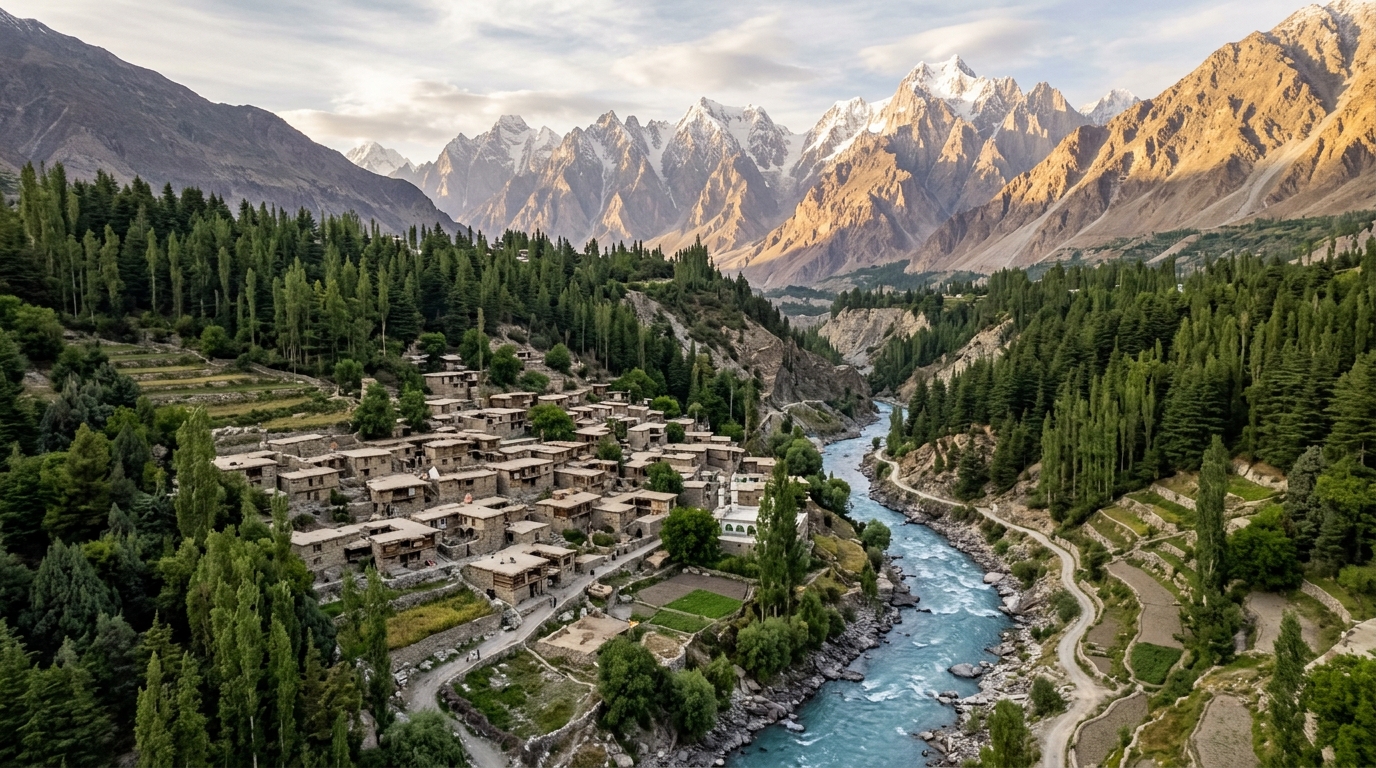
Why Northern Pakistan Remains One of Asia's Best Kept Secrets
Pakistan often gets overlooked by international travelers due to misconceptions about safety and accessibility. The truth, however, is quite different. Northern Pakistan particularly the regions of Gilgit-Baltistan and Khyber Pakhtunkhwa is home to some of the most stunning mountain scenery anywhere in the world.
Three of the world's fourteen highest mountains K2, Nanga Parbat, and Gasherbrum are located here. The region is also home to ancient Silk Road trade routes, centuries-old forts, glaciers, and valleys so beautiful that visitors often describe them as stepping into another world.
Yet despite all of this, the hidden villages tucked away in these mountains receive almost no international attention. That is exactly what makes them so special.
7 Hidden Villages of Northern Pakistan Worth Visiting
Here are seven remarkable villages that deserve a place on every serious traveler's list places that most travel guides simply do not cover.
1. Shimshal Village The Village at the Roof of the World
Located at an altitude of 3,100 meters, Shimshal is one of the most remote inhabited villages in Pakistan. For decades, it was accessible only by a dangerous mountain trail that took two days to walk. Today a rough road connects it to the outside world, but the journey is still an adventure in itself.
The people of Shimshal are known for their extraordinary mountaineering skills. Many of Pakistan's best high-altitude porters come from this village. The surrounding landscape includes massive glaciers, high-altitude pastures called "pameroon," and wide open skies that are completely free of light pollution.
Staying with a local family here is a deeply humbling experience. The warmth and generosity of Shimshali people is something that travelers remember for the rest of their lives.
2. Kalash Valleys A Living Ancient Civilization
The Kalash people of Chitral district are one of the most unique communities in all of Asia. With their own distinct language, religion, colorful traditional clothing, and ancient festivals, the Kalash represent a way of life that has survived for thousands of years.
The three Kalash valleys Bumburet, Rumbur, and Birir are nestled between steep mountains near the Afghan border. Walking through these valleys feels like traveling back in time. Wooden houses decorated with intricate carvings line the narrow paths, and the sound of traditional music drifts through the air during festival season.
The Kalash Festivals particularly Chilam Joshi in May and Uchal in August are extraordinary cultural events that very few outside travelers get to witness.
3. Khaplu The Ancient Kingdom Forgotten by Time
Khaplu is a small town in the Ghanche district of Baltistan that sits at the confluence of the Shyok and Saltoro rivers. Once the capital of an ancient Buddhist and later Muslim kingdom, Khaplu is rich in history and culture that most travelers never discover.
The centerpiece of Khaplu is its stunning 19th-century palace the Khaplu Fort which has been carefully restored and now operates as a heritage hotel. Staying inside the fort and watching the sun set over the surrounding peaks is an experience that no luxury resort can replicate.
The local bazaar, the old mosques, the apricot orchards, and the incredibly friendly local people make Khaplu one of the most rewarding off-the-beaten-path destinations in all of Pakistan.
4. Naltar Valley Hidden Meadows and Colorful Lakes
Just a short drive from Gilgit city, Naltar Valley is a well-kept secret even among Pakistani travelers. The valley is famous for its dense pine forests, crystal clear lakes that change color depending on the light, and wide open meadows perfect for camping.
The three lakes of Naltar known locally as the colorful lakes are perhaps the most photogenic spots in all of Gilgit-Baltistan. During spring the meadows are covered in wildflowers, and in winter the area becomes a ski destination used for national skiing competitions.
Unlike more famous valleys, Naltar still has very few tourists, which means you can enjoy its natural beauty in complete peace and quiet.
5. Neelum Valley Villages The Valley of Turquoise Waters
Neelum Valley stretches for over 200 kilometers along the Neelum River in Azad Kashmir. While the valley itself is becoming more popular with Pakistani tourists, the smaller villages along its upper reaches places like Sharda, Kel, and Arang Kel remain largely unknown to international travelers.
Arang Kel in particular is a magical place. Perched on a hilltop above the Neelum River, it can only be reached by a chairlift or a steep one-hour hike. The village consists of traditional wooden houses surrounded by terraced fields, apple orchards, and dense forests, with snow-capped peaks visible in every direction.
6. Chapursan Valley Where Pakistan Meets the Ancient Wakhan
Chapursan Valley is one of the most remote and least visited places in Pakistan. Located near the borders of Afghanistan and China, this narrow valley is home to the Wakhi people a community with a rich cultural heritage connected to the ancient Wakhan Corridor trade route.
The valley ends at a high mountain pass that was once used by traders crossing between Central Asia and the Indian subcontinent. Today it offers some of the most spectacular trekking in the entire region, with dramatic views of the Hindu Kush and Karakoram mountain ranges.
Staying with a Wakhi family in Chapursan and sharing their traditional meals and stories is a rare travel experience that very few people in the world have had.
7. Utror and Kalam The Forgotten Green Paradise
The Swat Valley is relatively well known in Pakistan, but most visitors stop at Kalam without venturing further into the upper valleys. The villages of Utror and Matiltan, located above Kalam, are among the greenest and most beautiful places in all of northern Pakistan.
Thick forests of pine and deodar cedar, rushing mountain streams full of trout, vast alpine meadows, and almost no crowds this area feels like a world completely removed from modern life. Local guesthouses offer simple but comfortable accommodation, and the fresh mountain air and stunning scenery make every moment here feel deeply restorative.
Essential Travel Information for Northern Pakistan
Before you plan your trip to these hidden villages, here is some practical information you should know:
| Category | Details |
|---|---|
| Best Time to Visit | May to October |
| Currency | Pakistani Rupee (PKR) |
| Language | Urdu, local dialects (Shina, Balti, Wakhi) |
| Entry Requirements | Valid passport, some areas require NOC permit |
| Getting There | Fly to Islamabad or Gilgit, then road travel |
| Accommodation | Local guesthouses, homestays, some hotels |
| Budget per Day | $15 to $40 USD depending on location |
Important Tips Before You Visit
Respect Local Culture and Traditions
Northern Pakistan is a deeply traditional region. Dress modestly, always ask permission before photographing people, and be respectful of local customs. The hospitality of local communities is extraordinary, and showing genuine respect goes a long way in building meaningful connections with the people you meet.
Check Permit Requirements in Advance
Some areas in Gilgit-Baltistan and near border regions require a No Objection Certificate (NOC) from local authorities. Check the latest requirements before you travel, as these regulations can change. Your hotel or guesthouse can usually help you arrange the necessary paperwork.
Travel with a Local Guide
For remote villages and trekking routes, traveling with a local guide is strongly recommended. Local guides not only know the terrain but also help you connect with communities in a more meaningful and respectful way. They also provide an important safety net in areas where mobile phone coverage is limited or nonexistent.
🌟 Why These Villages Are Worth the Journey
In a world where most tourist destinations are overcrowded and commercialized, these hidden villages of Northern Pakistan offer something increasingly rare genuine human connection, unspoiled natural beauty, and the feeling of discovering a place that the rest of the world has not yet found. That is a travel experience worth any amount of effort to reach.
How to Get to Northern Pakistan
The most common route is to fly into Islamabad's Benazir Bhutto International Airport and then either take a domestic flight to Gilgit or drive the famous Karakoram Highway one of the highest paved roads in the world.
The Karakoram Highway drive from Islamabad to Gilgit takes approximately 18 to 20 hours but passes through some of the most dramatic mountain scenery imaginable. Many travelers choose to break the journey over two days, stopping at Besham or Chilas along the way.
From Gilgit, local transport including jeeps, shared vans, and occasionally domestic flights connects travelers to the more remote valleys and villages described in this guide.
Final Thoughts
Northern Pakistan is one of the last great frontiers of authentic travel in Asia. The hidden villages described in this guide are not just destinations they are windows into ways of life, cultures, and landscapes that are unlike anything most travelers have ever experienced.
Whether you are drawn by the dramatic mountain scenery, the rich cultural heritage, the warmth of local hospitality, or simply the thrill of going somewhere that most people have never heard of Northern Pakistan will reward your curiosity in ways you never expected.
Start planning your trip today. These hidden gems are waiting to be discovered and the sooner you go, the more of their authentic magic you will get to experience.