
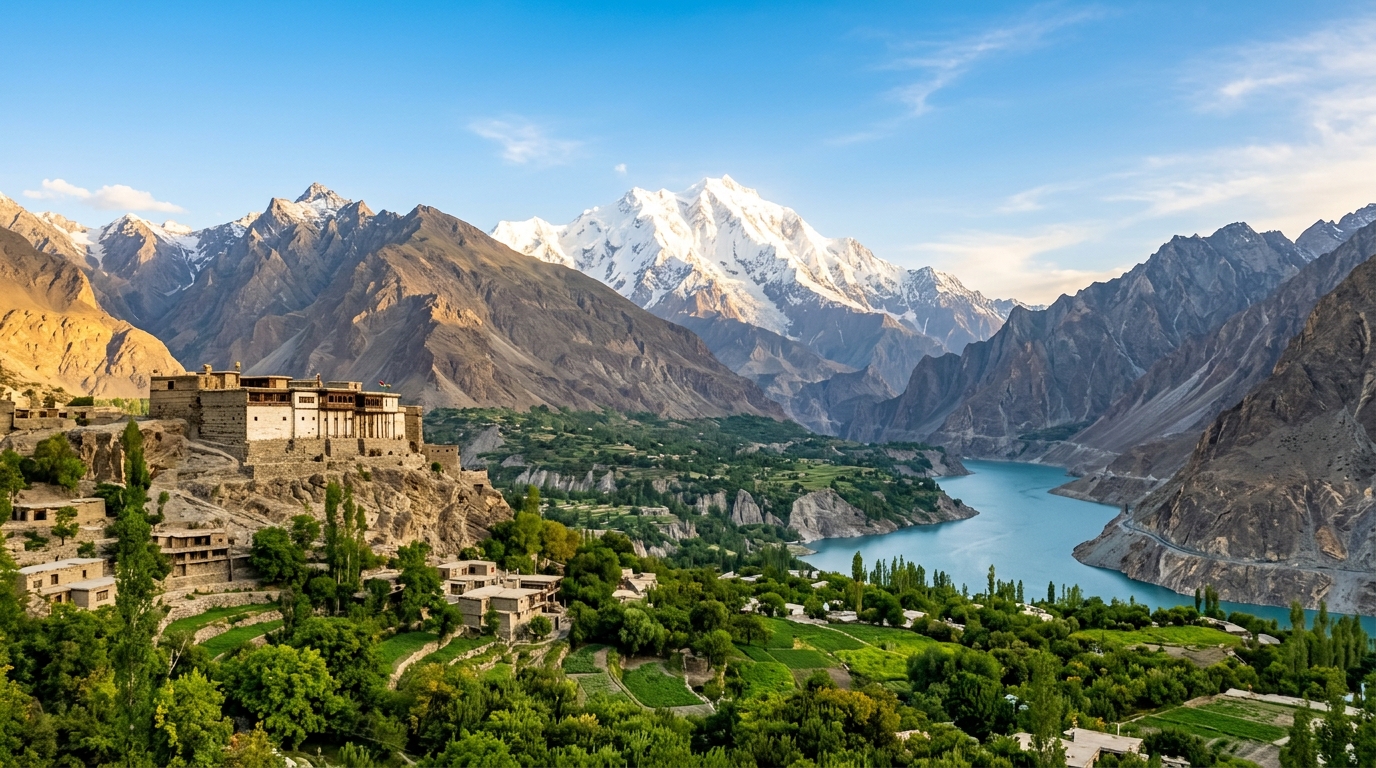
What Makes Hunza Valley So Special
Hunza Valley sits at an elevation of around 2,500 meters in the Gilgit-Baltistan region of northern Pakistan. It is flanked on all sides by towering peaks, including the majestic Rakaposhi at 7,788 meters and Ultar Sar at 7,388 meters. The valley stretches for dozens of kilometers along the Hunza River, and every turn in the road reveals a view more spectacular than the last.
But Hunza is not just about scenery. It has a rich history as a former independent kingdom that maintained its own royal family and traditions for centuries. The people of Hunza are predominantly from the Burusho community, who speak a unique language called Burushaski that is unrelated to any other language in the world. Their culture, cuisine, and way of life add an extra layer of depth to any visit.
What truly sets Hunza apart from other mountain destinations is the combination of natural beauty, cultural richness, safety, and genuine hospitality that welcomes every traveler who makes the journey here.
Top Places to Visit in Hunza Valley
Hunza has enough attractions to keep any traveler busy for at least a week. Here are the must-visit spots within the valley.
1. Baltit Fort A Window Into Hunza's Royal Past
Perched dramatically above the town of Karimabad, Baltit Fort is over 700 years old and served as the residence of the Mirs the rulers of the Hunza Kingdom for centuries. The fort has been beautifully restored and is now a UNESCO recognized heritage site.
Walking through its rooms and corridors gives you a vivid sense of how the royal family lived, and the views from the fort's rooftop across the valley and toward Rakaposhi mountain are among the most photographed in all of Pakistan. A visit here is absolutely essential for understanding the history and soul of Hunza.
2. Altit Fort The Oldest Standing Structure in Hunza
Older than Baltit Fort, Altit Fort dates back approximately 900 years and stands on a dramatic cliff edge above the Hunza River. The fort has also been carefully restored and includes a living heritage village at its base where local families maintain traditional crafts and ways of life.
The combination of the ancient architecture, the cliff-edge setting, and the surrounding mountain scenery makes Altit one of the most visually striking historic sites in all of Asia. Many travelers find it even more impressive than Baltit Fort because of how little it has been changed by tourism.
3. Attabad Lake The Stunning Turquoise Lake Born from Disaster
In 2010 a massive landslide blocked the Hunza River and created a new lake that flooded several villages and submerged a section of the Karakoram Highway. That lake Attabad Lake has since become one of the most photographed natural attractions in all of Pakistan.
The water is an almost impossibly vivid shade of turquoise, set against a backdrop of barren brown mountains and blue sky. Boat rides on the lake are available and affordable, and the contrast between the electric blue water and the surrounding rocky landscape is genuinely one of the most surreal and beautiful sights you will ever see.
4. Khunjerab Pass Standing at the Top of the World
At 4,693 meters above sea level, Khunjerab Pass is the highest paved international border crossing in the world and marks the frontier between Pakistan and China. The drive up to the pass from Hunza is an adventure in itself, passing through stunning high altitude landscapes and often encountering herds of yaks and Marco Polo sheep along the road.
Standing at the top of Khunjerab and looking across the roof of the world in both directions is an experience that puts the sheer scale of the Karakoram mountains into overwhelming perspective. Even in summer the temperatures at the pass can be very cold, so bring warm clothing regardless of the season.
5. Eagle's Nest Viewpoint The Best Sunrise in Asia
Perched high above Karimabad at around 3,200 meters, the Eagle's Nest viewpoint offers what many experienced travelers consider to be one of the finest panoramic views anywhere in the world. On a clear morning you can see Rakaposhi, Diran, Ultar Sar, Bojahagur Duanasir II, and dozens of other major peaks all at once.
Waking up before dawn and hiking or driving up to Eagle's Nest to watch the sunrise paint the surrounding mountains in shades of pink, orange, and gold is the kind of travel memory that stays with you forever. There is a small guesthouse at Eagle's Nest where you can stay overnight to ensure you catch the best light.
Hunza Valley Travel Information
Here is the essential practical information you need to plan a successful trip to Hunza Valley.
| Category | Details |
|---|---|
| Best Time to Visit | April to October (peak season May to September) |
| How to Get There | Fly to Gilgit from Islamabad, then drive 2 hours to Karimabad |
| Accommodation | Wide range from budget guesthouses to heritage hotels |
| Average Daily Budget | $20 to $50 USD depending on comfort level |
| Language | Burushaski, Urdu, basic English widely understood |
| Currency | Pakistani Rupee (PKR) |
| Mobile Coverage | Available in main towns, limited in remote areas |
The Food and Culture of Hunza
Traditional Hunza Cuisine
The food of Hunza is simple, fresh, and deeply satisfying. The local diet has traditionally been based on whole grains, fresh vegetables, dried fruits, and dairy products. Chapshuro is a popular local dish a flatbread stuffed with minced meat and vegetables that is baked on a hot griddle. Diram fiti is another local specialty made from buckwheat flour and served with walnut sauce.
Fresh apricot juice, mulberry juice, and locally made butter tea are among the most memorable drinks you will try in the valley. Almost every guesthouse and local restaurant offers freshly prepared meals using ingredients grown in the surrounding orchards and fields.
The Warmth of Hunza's People
One thing that every traveler to Hunza mentions without exception is the extraordinary kindness and hospitality of the local people. Being invited into someone's home for tea and fresh bread, being offered directions with genuine enthusiasm, or being greeted with warmth by complete strangers on a mountain trail these are the kinds of experiences that define a trip to Hunza.
The people of Hunza are predominantly followers of the Ismaili faith, a branch of Islam known for its emphasis on education, gender equality, and peaceful coexistence. The literacy rate in Hunza is among the highest in Pakistan, and the valley has a long tradition of welcoming travelers from around the world.
Practical Tips for Visiting Hunza Valley
Acclimatize Properly
Hunza sits at a significant altitude and many of the attractions around the valley are considerably higher. If you are coming from a low altitude location, give yourself at least one full day to acclimatize before attempting any strenuous hikes. Drink plenty of water, avoid alcohol, and do not rush your activities in the first couple of days.
Respect Local Customs
While Hunza is generally more relaxed than many other parts of Pakistan, it is still important to dress modestly and be respectful of local traditions. Women travelers will find Hunza to be one of the most comfortable and welcoming destinations in Pakistan, but modest clothing is still appreciated and recommended.
Carry Enough Cash
ATMs in Hunza can be unreliable and are not available in smaller villages. Always carry enough Pakistani Rupees to cover your expenses for several days. Credit cards are generally not accepted outside of larger hotels.
🌟 A Destination That Will Change How You See the World
Hunza Valley is not just a beautiful place to visit. It is a destination that challenges your assumptions, broadens your perspective, and reminds you of everything that is good about travel and about humanity. The mountains are magnificent, the history is fascinating, and the people are genuinely wonderful. There are very few places in the world that can honestly make all three of those claims at once.
How Many Days Do You Need in Hunza
A minimum of four to five days is recommended to see the main highlights of Hunza Valley without feeling rushed. If you want to include day trips to Attabad Lake, Khunjerab Pass, and some of the surrounding villages, plan for seven to ten days. Travelers who enjoy hiking and trekking often spend two weeks or more exploring the valley and its surrounding areas.
Many people who visit Hunza find it so captivating that they end up extending their stay well beyond their original plans. It is that kind of place.
Final Thoughts
Hunza Valley is one of those rare destinations that lives up to every expectation and then exceeds them. The combination of towering mountains, ancient forts, crystal clear lakes, vibrant local culture, and some of the warmest hospitality you will find anywhere in the world makes it a truly extraordinary place to visit.
Whether you are an adventure traveler looking for your next great challenge, a culture lover wanting to connect with a unique and ancient way of life, or simply a traveler in search of beauty and peace, Hunza Valley has something profound to offer you.
Book your trip, pack your bags, and go. Hunza Valley is waiting and it is even better than you can imagine.