
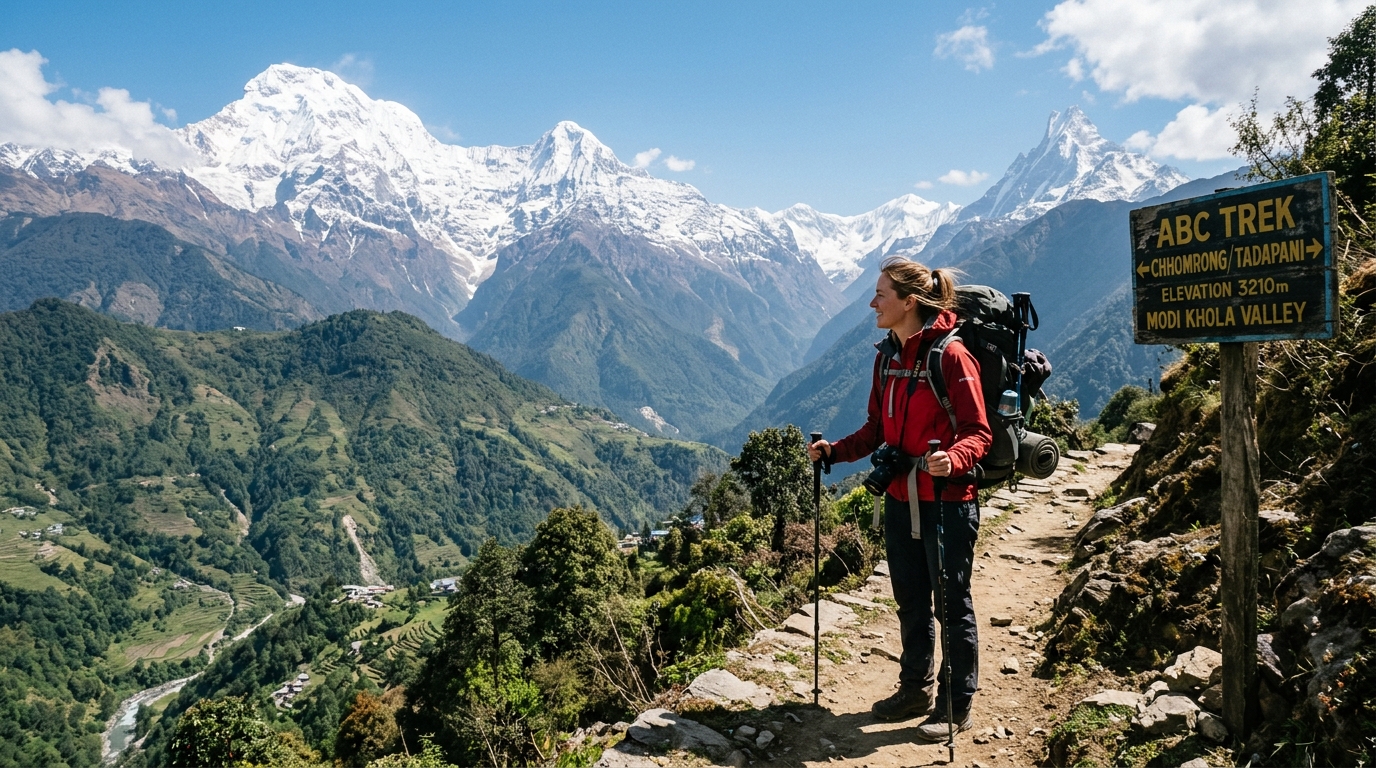
The Truth About Solo Trekking in Nepal
Nepal has been one of the world's great trekking destinations for decades and its trail infrastructure particularly on the most popular routes is genuinely excellent. The Annapurna Circuit, the Annapurna Base Camp trek, and the Langtang Valley trek are all well-marked, well-serviced, and lined with teahouses offering food and accommodation at regular intervals. On these routes, a reasonably experienced hiker with good physical fitness, the right gear, and the correct permits can absolutely trek independently without a guide.
However, the situation changed significantly in 2023 when the Nepal government introduced new regulations requiring all trekkers in certain restricted areas including the Everest Base Camp route and several other popular destinations to be accompanied by a licensed guide. These regulations have been updated several times and the requirements vary depending on the specific route and area.
Before planning any solo trek in Nepal, always check the most current permit and guide requirements directly with the Nepal Tourism Board, as these regulations continue to evolve.
Best Routes for Solo Trekking in Nepal
Here are the most popular and most suitable routes for independent solo trekking in Nepal, along with honest assessments of what to expect on each one.
1. Annapurna Base Camp Trek The Classic Solo Route
The Annapurna Base Camp trek is one of the most popular and most suitable routes for independent solo trekkers in Nepal. The trail is well-marked throughout, teahouses providing food and accommodation are available at regular intervals along the entire route, and the scenery culminating in the spectacular Annapurna Sanctuary surrounded by peaks above 7,000 meters is absolutely magnificent.
The trek starts and ends near Pokhara and reaches a maximum altitude of 4,130 meters at the base camp itself. Most moderately fit trekkers complete the route in 7 to 10 days at a comfortable pace with adequate acclimatization time. The route passes through rhododendron forests, terraced farmland, and high alpine meadows before entering the dramatic glacial cirque of the Annapurna Sanctuary.
The trail is busy enough that solo trekkers are rarely truly alone you will almost always be in proximity to other trekkers and local teahouse staff which adds a useful element of safety and social interaction to an otherwise independent journey.
2. Annapurna Circuit The Ultimate Independent Trek
The Annapurna Circuit is widely considered one of the greatest trekking routes in the world and has been a landmark destination for independent travelers for generations. The circuit loops around the entire Annapurna massif, crossing the Thorong La Pass at 5,416 meters, passing through dozens of different ethnic and cultural communities, and offering an extraordinary diversity of landscapes from subtropical river valleys to high altitude desert plateaus.
The full circuit takes 12 to 20 days depending on pace and the side trips you choose to include. The infrastructure along the route is excellent with teahouses available every few hours of walking. The trail passes through areas of outstanding natural beauty and cultural richness, and the sense of genuine achievement upon completing the full circuit is one of the most satisfying feelings available in Himalayan trekking.
3. Langtang Valley Trek Less Crowded and Deeply Rewarding
The Langtang Valley is one of Nepal's most beautiful and least crowded major trekking destinations. Located just north of Kathmandu, it is significantly closer to the capital than the Annapurna region and offers equally dramatic mountain scenery with far fewer trekkers on the trail.
The valley was devastated by the 2015 earthquake which destroyed Langtang village and killed many local people. The community has since rebuilt with remarkable resilience and visiting the Langtang Valley today is also an act of support for a community that has worked incredibly hard to restore its home and its tourism economy. The scenery including views of Langtang Lirung at 7,227 meters is spectacular, and the Kyanjin Gompa monastery at the head of the valley is one of the most peaceful and beautiful places in all of the Himalayas.
4. Ghorepani Poon Hill Trek Perfect for First Time Trekkers
The Poon Hill trek is the most popular short trek in Nepal and an ideal starting point for trekkers who are new to Himalayan hiking or who have limited time. The route from Nayapul near Pokhara to the Poon Hill viewpoint at 3,210 meters and back takes just 3 to 5 days and offers genuinely spectacular views of the Annapurna and Dhaulagiri mountain ranges.
The trail passes through traditional Gurung villages and rhododendron forests that are spectacular when in bloom during spring. The sunrise from Poon Hill viewpoint with Annapurna South, Hiunchuli, Machhapuchchhre, and dozens of other peaks glowing in the early morning light is one of the most famous and most beautiful views in all of Nepal and fully justifies the effort of the predawn climb to the viewpoint.
Nepal Trekking Permits What You Need to Know
All trekkers in Nepal require permits to access the national parks and conservation areas through which most trekking routes pass. Here is a summary of the main permits required for popular routes.
| Permit Type | Where Required | Approximate Cost |
|---|---|---|
| TIMS Card (Trekkers Information Management System) | Most trekking routes | $20 USD |
| Annapurna Conservation Area Permit | All Annapurna routes | $30 USD |
| Langtang National Park Permit | Langtang Valley trek | $30 USD |
| Sagarmatha National Park Permit | Everest region treks | $30 USD |
| Restricted Area Permit | Upper Mustang, Dolpo, etc. | $500 to $700 USD |
Essential Tips for Solo Trekking in Nepal
Start Your Trek from Pokhara Not Kathmandu
Most trekkers heading to the Annapurna region make the mistake of spending too many days in Kathmandu before starting their trek. Pokhara is a far more relaxed and pleasant base for preparing for an Annapurna trek, is much closer to the trailheads, and offers everything you need for final gear purchases and permit arrangements. Taking a tourist bus or domestic flight from Kathmandu to Pokhara and starting your preparations there saves both time and stress.
Always Register Your Trek Route
Before starting any solo trek in Nepal, register your planned route and expected return date with your accommodation in Pokhara or Kathmandu, and ideally also with your country's embassy in Kathmandu. In the event of an emergency, this information is essential for search and rescue operations. The Nepal Tourism Board also maintains a trekker registration system that provides an additional layer of safety documentation.
Carry a Detailed Offline Map
Mobile phone coverage is unreliable on most trekking routes in Nepal and completely absent in many sections. Download a detailed offline map of your route before you leave civilization and carry a paper backup map as well. The Maps.me and Gaia GPS apps both offer good offline coverage of Nepal's main trekking routes and are widely used by independent trekkers.
Acclimatize Properly and Never Rush
Altitude sickness is the most common and most serious health risk for trekkers in Nepal. The golden rule of high altitude trekking is to ascend no more than 300 to 500 meters of altitude per day once above 3,000 meters, and to include at least one full rest day for every 1,000 meters of altitude gained. Rushing to complete a trek faster than your body can adapt is the most common cause of altitude sickness and the most preventable.
🌟 Why Solo Trekking in Nepal Is Truly Special
There is something uniquely powerful about making your own way through the Himalayas at your own pace, on your own schedule, entirely under your own power. Solo trekking in Nepal teaches you things about yourself that no guided tour can replicate. The decisions are yours, the challenges are yours, and the rewards are entirely and deeply yours. That sense of personal achievement of having walked through one of the world's great mountain landscapes under your own steam is one of the most lasting and meaningful gifts that travel can give.
What to Pack for a Solo Nepal Trek
Packing correctly for a Nepal trek is critically important. Here are the essentials that every solo trekker should carry regardless of the route or season.
- Sturdy ankle-supporting hiking boots properly broken in before departure
- Layered clothing system including thermal base layers, fleece mid-layer, and waterproof outer shell
- Sleeping bag rated to minus 10 degrees Celsius minimum
- Trekking poles for knee support on descents
- Headlamp with spare batteries
- Water purification tablets or a UV water purifier
- Basic first aid kit including altitude sickness medication
- Sun protection including high SPF sunscreen, sunglasses, and a hat
- Offline maps downloaded before departure
- Copies of all permits and travel documents
Final Thoughts
Solo trekking in Nepal without a guide is absolutely possible on the main popular routes and is one of the most rewarding adventure travel experiences available anywhere in the world. With proper preparation, the right permits, good physical fitness, and a sensible approach to altitude and safety, independent trekkers can experience the full magnificent beauty of the Himalayas entirely on their own terms.
Always check the current permit and guide requirements before planning your specific route, prepare thoroughly, and approach the mountains with respect and patience. Nepal's trails are waiting for you and the experience of walking through the roof of the world under your own power is something you will carry with you for the rest of your life.
Start planning your solo Nepal trek today. The Himalayas are calling.