
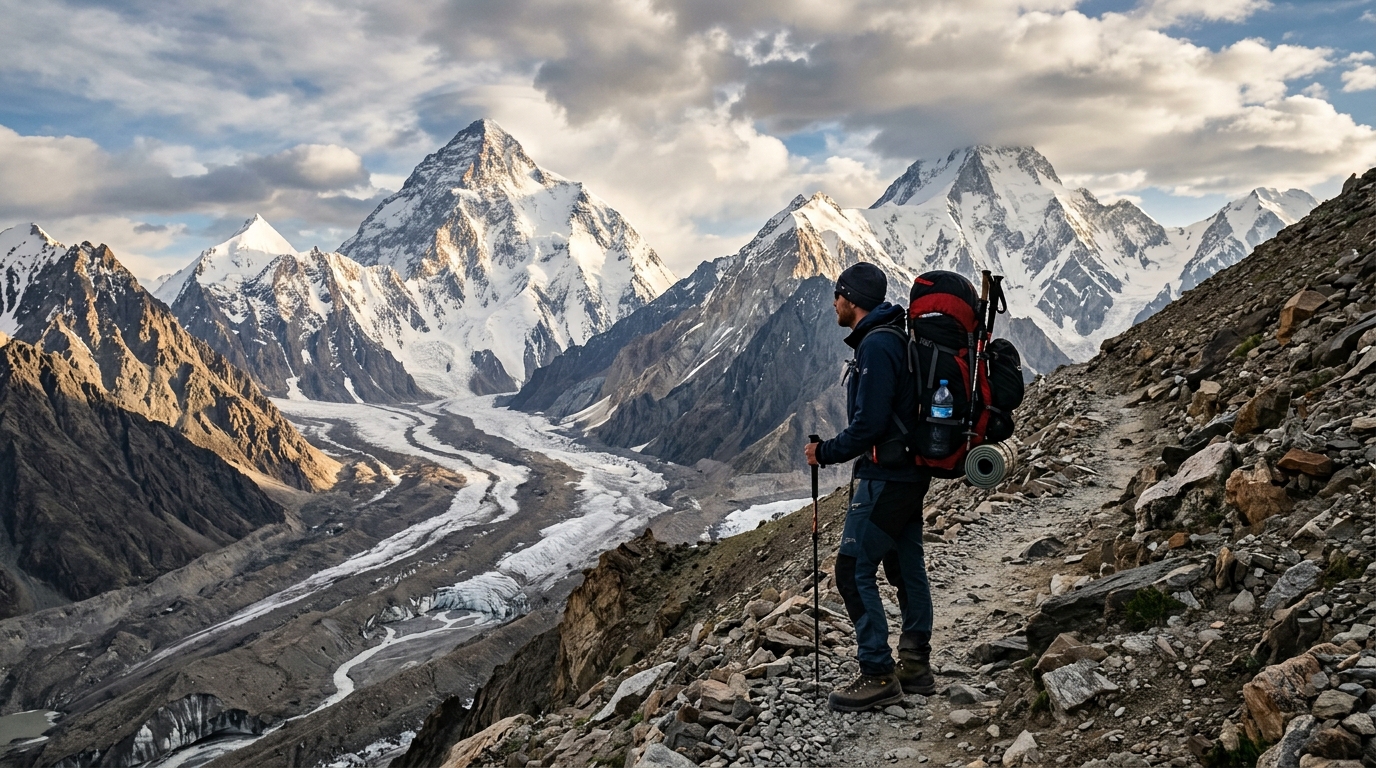
Why the Karakoram Is Unlike Any Other Trekking Destination
The Karakoram range stretches across the borders of Pakistan, China, and India and contains some of the highest and most technically demanding mountain terrain on the planet. What makes it extraordinary for trekkers is not just the altitude and scale of the mountains it is the combination of dramatic scenery, ancient glaciers, remote villages, and a sense of genuine wilderness that is becoming increasingly rare in the modern world.
Unlike the trekking routes of Nepal which are well-developed, heavily trafficked, and lined with comfortable teahouses every few hours, Karakoram trekking is far more raw, demanding, and unpredictable. The trails are less marked, the infrastructure is more basic, the weather is more extreme, and the rewards are correspondingly greater.
Trekkers who come to the Karakoram prepared for its realities have experiences that they describe as the most extraordinary of their lives. Those who come unprepared often struggle significantly. This guide is designed to make sure you belong to the first group.
The Most Popular Karakoram Trekking Routes
1. K2 Base Camp Trek The Crown Jewel of Karakoram Trekking
The trek to K2 Base Camp in the Baltoro Glacier region is widely considered one of the greatest trekking experiences in the world. The journey from Askole village to Concordia the meeting point of several massive glaciers where K2, Broad Peak, and the Gasherbrum peaks are all visible simultaneously is a walk through some of the most overwhelming mountain scenery imaginable.
The full trek to K2 Base Camp and back takes approximately 18 to 22 days and covers around 160 kilometers of challenging terrain. The route crosses the Baltoro Glacier one of the longest glaciers outside the polar regions and reaches altitudes above 5,000 meters. This is not a trek for beginners, and proper physical preparation is absolutely essential.
A licensed guide, registered porters, and a trekking permit are all required for this route. The permit costs are set by the Pakistani government and must be arranged in advance through a registered trekking agency.
2. Nanga Parbat Base Camp Trek The Killer Mountain Up Close
Nanga Parbat at 8,126 meters is the ninth highest mountain in the world and one of the most technically demanding climbs ever attempted. The trek to its base camp is far more accessible than the K2 trek but no less dramatic in terms of the scenery it offers.
The most popular approach is through the Fairy Meadows a spectacularly beautiful alpine meadow at around 3,300 meters that offers one of the most iconic views in all of Pakistan. From Fairy Meadows the trail continues up through pine forests and rocky terrain to the Nanga Parbat Base Camp at approximately 4,200 meters.
The trek takes between 5 and 8 days depending on the route and pace, making it much more accessible for trekkers with limited time. The Fairy Meadows area has basic but adequate accommodation options, and the overall experience is extraordinary for anyone who loves mountain scenery and adventure.
3. Rush Lake Trek The Highest Lake Trek in Pakistan
Rush Lake at 4,694 meters is one of the highest lakes in Pakistan and the trek to reach it from the village of Hoper in the Nagar Valley is one of the most rewarding shorter treks in the entire Karakoram region. The trail passes through walnut and apricot orchards, climbs steeply through rocky terrain, and ultimately delivers you to a stunning turquoise lake surrounded by glaciers and towering peaks.
The full trek takes 3 to 4 days and is accessible to reasonably fit trekkers without high altitude mountaineering experience. Views of Rakaposhi, Diran, and other major Karakoram peaks are available throughout the route and the relative accessibility of the trek compared to the K2 route makes it an excellent introduction to Karakoram trekking.
4. Passu Glacier Trek A Perfect Beginner Karakoram Trek
For trekkers who want to experience the Karakoram without the demands of a multi-week expedition, the Passu Glacier trek near Passu village in Upper Hunza is an excellent starting point. The trek takes just one to two days and provides an intimate introduction to glacier travel, dramatic mountain scenery, and the incredible landscape of the upper Karakoram.
The famous Passu Cathedral peaks a collection of dramatically jagged rock spires that rise above the Hunza Valley are visible throughout the trek and make for some of the most photogenic mountain scenery in all of Pakistan. The nearby Hussaini suspension bridge one of the most photographed and most terrifying rope bridges in the world adds an extra element of adventure to any visit to the area.
What Nobody Tells You About Karakoram Trekking
Every guidebook covers the basics of Karakoram trekking. What they often fail to mention are the practical realities that significantly affect the experience. Here is the honest truth about what to expect.
The Altitude Will Affect You More Than You Expect
Many trekkers arrive at the Karakoram after reading about altitude sickness and thinking they understand it. The reality of altitude at 4,000 meters and above is always more demanding than first-time high altitude trekkers anticipate. Headaches, disturbed sleep, reduced appetite, and general fatigue are common even among fit and experienced trekkers. Going slowly, staying well hydrated, and giving your body adequate time to acclimatize at each altitude level is not optional it is essential for a safe and enjoyable trek.
The Weather Changes Faster Than You Can Imagine
Karakoram weather is notoriously unpredictable. Clear blue skies in the morning can give way to powerful storms by afternoon, and storms at high altitude can bring heavy snow even in the middle of summer. Always carry full rain and wind protection regardless of how good the forecast looks when you set out, and never underestimate the speed at which conditions can deteriorate in the high mountains.
Good Boots Are Not Optional
The terrain in the Karakoram particularly on glacier approaches and rocky moraine sections is genuinely demanding on footwear. Thin-soled hiking shoes or casual walking shoes will leave you in pain within the first day. Proper ankle-supporting hiking boots with good grip are absolutely essential, and they must be properly broken in before your trek begins. Buying boots at your destination is not advisable as quality options are very limited.
Porter Culture Requires Respect and Fairness
Porters are an essential part of any serious Karakoram trek and the communities they come from particularly in the Baltistan region have generations of experience and knowledge in these mountains. Paying fair wages, providing adequate food and shelter, and treating your porters with genuine respect is not just ethically right it is also practically important because experienced and well-treated porters are invaluable in difficult conditions.
Essential Trekking Information for the Karakoram
| Category | Details |
|---|---|
| Best Trekking Season | Late May to early October |
| Entry Point | Islamabad, then Gilgit or Skardu by flight or road |
| Permits Required | Yes — trekking permits required for most routes |
| Recommended Fitness Level | Good to excellent depending on route |
| Average Trek Duration | 3 days to 22 days depending on route |
| Average Cost per Day | $30 to $80 including guide and porter |
| Accommodation on Trail | Basic campsites and occasional village guesthouses |
How to Prepare for a Karakoram Trek
Physical Preparation
The Karakoram demands real physical fitness, particularly for longer routes like the K2 Base Camp trek. Begin a dedicated training program at least three months before your departure that includes regular long distance hiking with a loaded pack, cardiovascular training, and if possible some practice trekking at altitude. The fitter you are when you start, the more you will enjoy every day of the trek rather than simply enduring it.
Gear Preparation
Packing the right gear for a Karakoram trek is critically important. Layering is essential as temperatures can range from very warm in the valleys to well below freezing at high altitude overnight. A quality sleeping bag rated to at least minus 10 degrees Celsius is necessary for higher altitude camps. Trekking poles significantly reduce the strain on your knees during long descents on rocky terrain and are highly recommended.
Mental Preparation
Multi-day trekking in a remote mountain environment with limited communication, basic facilities, and unpredictable conditions requires mental resilience as much as physical fitness. There will be difficult days when the weather is bad, the trail is harder than expected, or altitude is affecting your energy and mood. Preparing yourself mentally for these challenges and cultivating a flexible and patient mindset will make the difference between a journey you endure and one you truly love.
🌟 Why the Karakoram Is Worth Every Challenge
Every difficult moment on a Karakoram trek the aching legs, the sleepless nights at altitude, the cold mornings, the unexpected storms fades into insignificance when you stand at Concordia surrounded by four eight-thousanders, or watch the sun rise over Nanga Parbat from Fairy Meadows, or reach the shore of Rush Lake with glaciers reflecting in the still water around you. The Karakoram is genuinely one of the most extraordinary places on Earth, and the effort required to experience it properly is part of what makes it so profoundly rewarding.
Final Thoughts
Trekking in the Karakoram is not for everyone and that is part of what makes it so special. It demands preparation, respect, physical effort, and a genuine willingness to embrace the challenges and uncertainties of remote mountain travel. In return it offers experiences of natural beauty, human connection, and personal achievement that are available nowhere else on Earth.
If you are willing to prepare properly, respect the mountains and the communities that call them home, and approach the journey with patience and humility, the Karakoram will give you some of the greatest experiences of your entire life.
Start preparing today. The mountains are waiting — and they are more magnificent than you can possibly imagine.